Sunday, July 23, 2017

Europe Series Resource

From a friend so I can refer to it during our Geography lenses this year.  We are focusing on Medieval times, Exploration and Renaissance so these will fit in well as we "explore"!

Rick Steves' Europe Season 8 Playlist

Thanks, RaNae!

Seminary Tips: Very Applicable!

I was just going to post this in my "Brain of the Bomb" general info blog but realized, looking through it, how applicable it was to everyday homeschool teaching.

So here it is!

Encourage your students to . . . read more slowly and more carefully and with more questions in mind. Help them to ponder, to examine every word, every scriptural gem. Teach them to hold it up to the light and turn it, look and see what’s reflected and refracted there.
Jeffrey R. Holland, “Students Need Teachers to Guide Them,” CES satellite broadcast, June 29, 1992

Doctrine: A fundamental, unchanging truth of the gospel of Jesus Christ
How to identify principles and doctrines that are indirect:

  • #1.Look for cause-and-effect relationships#2 Ask questions
  • Implied principles can also be identified by asking questions like the following:
  • •What is the moral, or point, of the story?
  • •Why did the author include these events or passages?
  • •What did the author intend for us to learn?
  • •What are some of the fundamental truths taught in this passage?
  • Elder Richard G. Scott (1928–2015) of the Quorum of the Twelve Apostles emphasized:
    Elder Richard G. Scott“It is worth great effort to organize the truth we gather to simple statements of principle” (“Acquiring Spiritual Knowledge,” Ensign, Nov. 1993, 86).
    As you do as Elder Scott suggests—“organize the truth [you] gather to simple statements of principle”—you will find that the most helpful statements of doctrine or principle share some of the following characteristics:
    They are complete statements.
  • •They are simple, clear, and succinct.
  • •The truths they express are fundamental, unchanging, and timeless.
  • •They often suggest action as well as associated consequences.
  • •They are personally relevant.
How to help them apply principles:
-it needs to get into our hearts
-the Holy Ghost is necessary for that to happen
-open your mind to questions...ASK good questions!
-It's good to study them
-It's better to understand them
-It's best to live them!
LESSON #3
The student's role:
-Develop daily scripture study habits
-Prepare their hearts and minds
-Discover/express relevant of doctrines/principles
-Deepen understanding through study, meditation and prayer
-Ask questions and seek for answers
-Share insights
-Explain gospel doctrines/principles to others and testify
-Develop scripture study skills

My role to help them:
-encourage, inspire and remind
-set the example
-welcome all levels of participation since all students are at different levels
-create a good environment
-teach simplicity of steps to fulfill their roles
-create situations where they can practice how to become better student learners.
Push-up object lesson:
Bednar: “Learning by faith requires spiritual, mental, and physical exertion and not just passive reception. … A student must exercise faith and act in order to obtain the knowledge for himself or herself” (“Seek Learning by Faith” [address to CES religious educators, Feb. 3, 2006], 3, si.lds.org).
triangle diagram
 D&C 50:19 And again, he that receiveth the word of truth, doth he receive it by the Spirit of truth or some other way?
 20 If it be some other way it is not of God.
 21 Therefore, why is it that ye cannot understand and know, that he that receiveth the word by the Spirit of truth receiveth it as it is preached by the Spirit of truth?
As part of this discussion, help students understand that one important way to learn by the Spirit is to be willing to share our testimonies with each other. Read the following statement by Elder Richard G. Scott of the Quorum of the Twelve Apostles:
Elder Richard G. Scott
“As students verbalize truths, [these truths] are confirmed in their souls and strengthen their personal testimonies” (“To Understand and Live Truth” [address to CES religious educators, Feb. 4, 2005], 3, si.lds.org).
“[The students’] decision to participate is an exercise in agency that permits the Holy Ghost to communicate personalized message suited to their individual needs. Creating an atmosphere of participation enhances the probability that the Spirit will teach more important lessons than you can communicate.
“That participation will bring into their lives the direction of the Spirit” (Richard G. Scott, “To Learn and to Teach More Effectively” [Education Week devotional, Aug. 21, 2007], 4–5, speeches.byu.edu).
ESP
To help students understand that negative actions can also influence the rest of the class, ask:
  • What kinds of attitudes or behaviors offend the Spirit in a seminary class?

Tuesday, January 31, 2017

Choosing the Best Patterns of Education for your Family

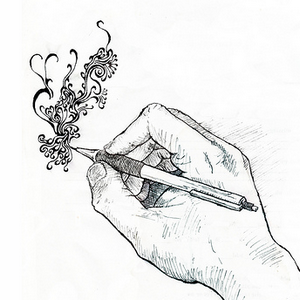
Image result for picture of doodlingAfter devotional this morning, Pipalicious (10) asked the question: what is the difference between doodling and drawing?  We came to the conclusion that the biggest difference between them is that with drawing, you start out with a goal in mind, while with doodling, whether with a pattern or method or abstract, doesn't begin with an end in mind.

After another song of reflection, Hava (8) piped up and said, "I think that doodling is like us in our life. Sometimes we are wandering around and don't know where we are.  And then when God comes in it is like He helps you to draw your life and it helps you."

Profound.

I have felt so blessed as I have just sought to follow the Spirit in our homeschooling curriculum. I am still very imperfect at trusting my promptings and sometimes default to "overplan"/"overschedule" mode, but I have become better at recognizing what that feels like (blegh!) and so try to stop what I am doing when I feel that way and re-evaluate and seek inspiration once again.

After talking with my missionary Lek, I have also been considering on the value of an inspired schedule and the blessing that come with being obedient to it.  If it is truly inspired, I need to have faith that it is important.


Some "patterns" that are helpful and inspiring for our family, some patterned after D&C 88:
-meals together
-basics/jobs done by 9 am
-exercise
-worship at church and at home
-four lenses (one week a month loosely dedicated to each one)
-temple attendance (whatever regularity God tells us to do)
-family history daily
-monthly themes to help us revisit important fundamental questions about ourselves and the world around us. (I use these to guide the topics of my devotionals and family reading...among other things.)
Image result for picture of plant growing
One of the biggest, constant components of our regular, inspired schedule is devotional which, some mornings like this morning, last over an hour.  But to have the results of the above conversation?...priceless.

Earlier in the devotional, we talked about patterns we can follow (following up on our FHE last night on "A Pattern In All Things" talk from 1990:https://www.lds.org/general-conference/1990/10/a-pattern-in-all-things?lang=eng).  Good patterns.  Bad patterns.  I read from two sweet kids books that Hava "happened" to give me, saying, "why don't we read these?"  The books fit perfectly into the idea of patterns. ("If You Plant a Seed" and "Cinderella CTR.")  We talked about patterns of God, like being honest.  Choosing the right.  We talked about consequences.  We drew pictures of flowers and talked about how everyone's daily pattern, like those flowers, will look different.  And each is beautiful.  And then we had the awesome discussion sparked by my girls at the end of reflection time, another part of our inspired plan for us.

I have been just trying to follow the Spirit with my homeschooling.  I have a loose focus on a different lens every week. If it is the Geo-conquest week, I will cover geography from wherever we are reading in history or in our read-aloud book.  Eureka week, we will play more math games or pick up my "In the Beginning" science book and have a few days of fun immersion in science.  Imaginative Arts week, we will bring out the paints, art, whatever.   Every week is Leadership week in my home :).  That is my main focus. Sometimes I use those in between weeks for "getting back to basics."  You could definitely term them "leadership academy

However, I am not limited to this pattern.  The biggest "pattern" is this: pray, offer my loaves and fishes to God, read my scriptures, go to the temple as often as I feel I can and then move forward with what God tells me to do. If He has no new inspiration, I can settle comfortably into my sub-patterns.  I seek to engage in spiritual experiences as often as I can and then when God tells me to be still and move on, I will.  The Bread and Water of life which is our Savior and His enabling Atonement are truly life-giving and sustaining.
Image result for image of joseph smith
Look at Joseph Smith!  He learned so much in the middle of an insane life full of tribulation and sheer busy-ness.  We, too, can, when our focus is on God.

Patterns.  We are each trying to take a look at the patterns, good and bad, that have in our life.  Each of us in our family. It is neat to hear the unique tweaking God has for each of us.

One thing I felt inspired to do was to prepare the play, "Antigone."  We found a translation online and we are memorizing most of it, with only major parts edited out for our little Pipalicious, who is the chorus with many lines.  As we have reviewed and rehearsed it, it is amazing all that we are learning in the process: political questions, moral questions, elocution, memorization, presentation, clarity, emotions.  As in any good play, the writer has captured many extremes of human emotion and by acting them out, we can see their reflection in ourselves.  Ahhhh....the beauty of the arts.

I put this inspiration off for a few months.  I mean, what kind of crazy person puts on an ancient Greek play with 6 people ranging from a mom to an 8 year old??  But here we are.  And I am learning through the lens of God's pattern for my family.  I love to sit back and watch the Spirit through books, media and other arts work the miracle of education in our home!

Just need to remember this moment of happiness and trust more when it seems there is so much more my children could be learning when they are all giggling together with the baby in the front room like they are now :D.

I have been hesitant to post anything here for a little while.  Like when we spent two weeks after learning about the 7 Wonders having the kids do prezi "7 Wonder" presentations of their own...finding whatever they thought was wonderous about the world.  We learned about animals, the Outback, extreme sports and the Restoration...all examples of wonders that were covered.  It was meaningful, self-education and teaching that taught so much!  And it all came after learning briefly about the Ancient Wonders and thinking, "What would I consider the 7 most wondrous things ever?" I had each kid assigned a day to present on and we did it!  Super cool.

But to blog about that, I can just see someone saying, "Oh!  I want to do that idea!" Well, it will be an awesome idea if it feels right and not just that you are trying to duplicate someone else's awesomeness because you don't have faith in your own.

Revisit Oliver DeMille's "Eighth Key" speech so many years ago, wherein he spoke about how all mentors need to have a firm conviction of the genius of everyone.  Including themselves.  It is hard for children to believe they have genius and awesomeness when they are daily confronted with an adult who does not see the genius and awesomeness of themselves. And says so. God can work with all of our geniuses.  Begin to trust.  Begin to experiment with God-inspired schedules and patterns that are unique to your family.  It is incredible. It is freeing.  It is true, individually-tailored leadership education.  It is a pattern for peace as you rest each night knowing that you did exactly what God told you to do and having confidence that what He has to say is enough.

(Link to DeMille's speech: $5.99...might be worth it.  If you feel prompted to :D.)


Saturday, January 14, 2017

"Do Hard Things" Course

I felt inspired to challenge the kids to read "Do Hard Things" and whoever read it would be able to participate in the book discussion/obstacle course.  Drew and Hyrum didn't finish it but committed to finishing it before reading any other book (except scriptures, of course).  The visuals are on our Singing Bees blog.

The details are below :).

#1 Do one of the following:
  1. Tie a tie
  2. Tie a tie with gloves on
  3. Tie a tie with gloves and a blindfold on

#2 Memorize a nursery rhyme from the Nursery Rhyme book that you have never heard of before and run and recite it to Mom

#3 Find words in scriptures to make a sentence. You can only use one word per scripture. Right down the references and words on the back.
  1. Write a sentence 3-5 words long
  2. Write a sentence 6-8 words long
  3. Write a sentence 9 words or longer

#4 Find the bucket in the front of the building and, using the rags and water, super clean one of the boots.

#5 Write a meaningful, well-written note to someone.

#6 Walk across the gym in high heels (one way)

#7 Recite backwards for Mom:
  1. The planets
  2. The ABCs
  3. The 13th Article of Faith

#8 Run your fastest for
  1. .1 mile
  2. .2 mile
  3. .3 mile
#9 Try a new machine in the work-out room, do it 5 times and record the weight and machine you used:

Machine name: _____________________
Weight used: ______________________

#10 Sing primary song dramatically and clearly
  1. "Kindness begins with me"
  2. "Popcorn Popping"
  3. Both verses of "Book of Mormon Stories"

#11 How many marshmallows can you fit into your mouth and say "Chubby Bunny" in 30 seconds?

#12 Drag one or more of your siblings or mom across the floor of the gym on a towel from baseline to half court
  1. Younger sibling
  2. Two siblings
  3. Mom

#13 Pick one or more of the tongue twisters on the back and say it to someone else 10 times.
  1. One of them
  2. Two of them
  3. Three of them

#14 Fold one item to perfection from the pile
  1. Pillow case
  2. Flat sheet (green)
  3. Fitted sheet (white)

#15 Drink one of the containers completely and then fill it up again!
  1. #1
  2. #2
  3. #3
Hard Tongue Twister Phrases
  • A big bug bit a bold bald bear and the bold bald bear bled blood badly. 
  • Brisk brave brigadiers brandished broad bright blades, blunderbusses, and bludgeons -- Balancing them badly. 
  • Can you can a canned can into an uncanned can like a canner can can a canned can into an uncanned can? 
  • If you must cross a course cross cow across a crowded cow crossing, cross the cross coarse cow across the crowded cow crossing carefully. 
  • Imagine an imaginary menagerie manager managing an imaginary menagerie. 
  • The sixth sick sheik's sixth sheep's sick.
    (This is the World's Hardest Tongue Twister, according the Guiness Book of World Records.)

Thursday, November 3, 2016

Learning Haiku

Fun guide for children how to write haiku (also teaches about syllables a bit and has a link to teach more...always more fun to learn about things like syllables when there is context!):
Examples:
Haiku template for starter haiku-ians

We had a great "discussion" about how poetry always rhymes (thanks, honey :D) vs. how poetry defined as writing not confined by the rules of grammar.

Wednesday, November 2, 2016

Fun with Asia!

We have had fun with learning stuff this month about Asia!

Here are some links to videos that are good starting points for either discussion or application, and not just ends to themselves:

Post-beginning series on chess strategies (the following vimeo videos are all links to beginning-ish parts of series taught by a good friend, as part of the HEV project):

Overview of China (haven't previewed...good source though, so I trust it)
Chess strategy
Chess Piece Value
Abacus lesson 2 (we already watched #1 on youtube...very insightful, even if you don't have the same kind of abacus)
Origami beginning lesson
Beginning Cursive

Cool video on Buddhism:
on Hinduism:


Tuesday, November 1, 2016

Week 4: Devotional on Origin of Universe and Purpose of Earth

Big picture and answer to the questions civilizations have been asking and seeking to answer since the dawn of time through science and religion:
Look at our universe and the creations of God:
And our responsibility towards it:
Battle of Good and Evil on this earth:
Casting off of Devils

Cool big picture example of putting it all together and the beautiful roles of science and religion merged: