Showing posts with label class prep. Show all posts

Wednesday, November 2, 2016

Fun with Asia!

We have had fun with learning stuff this month about Asia!

Here are some links to videos that are good starting points for either discussion or application, and not just ends to themselves:

Post-beginning series on chess strategies (the following vimeo videos are all links to beginning-ish parts of series taught by a good friend, as part of the HEV project):

Overview of China (haven't previewed...good source though, so I trust it)
Chess strategy
Chess Piece Value
Abacus lesson 2 (we already watched #1 on youtube...very insightful, even if you don't have the same kind of abacus)
Origami beginning lesson
Beginning Cursive

Cool video on Buddhism:
on Hinduism:


Monday, October 17, 2016

Week 2: Freedom to Appreciate the Uniqueness that is You; Personal Project for the month

I have felt prompted to focus on two areas that will allow us to be more free in our own lives:
-freedom from slavery to appetite
-freedom of forgiving others
Our official way of putting it: Freedom to appreciate the uniquenss that is YOU!

This week, I feel prompted that one way to free us from our slavery to appetite is not only to appreciate our bodies so that we will want to care for them in how we eat, but to be aware of other appetites, like pornography, what it is and how to avoid it.

Here are some of our daily devotional topics I feel we should cover:
-Your body: "Helping Children Appreciate Their Bodies" ---June 2015 Ensign
"How to Treat Little Children"

Develop Close, Loving Relationships with Children

President George Albert Smith once explained that “our children are the most precious gift that our Father bestows upon us. If we can guide their feet in the pathway of salvation, there will be joy eternal for us and for them” (in Conference Report, Apr. 1915, p. 95).
To guide their feet properly, we must show natural affection to children from the very beginning. Infants need to be physically and emotionally cared for. They need continual intimate contact with their parents. It is in this intimate closeness that their future relationships begin to develop.
To develop close, loving relationships with infants, keep them clean and fed, and meet all of their needs kindly and consistently. From this steady, predictable care, infants develop a sense of emotional security and learn that they can trust other people. Constantly give approval to them. Watch, applaud, hug, and kiss them when they lift their heads, turn over, crawl, sit up, or stand.
Be kind and patient as infants learn to do things for themselves. Harsh correction could diminish their self-esteem and make them anxious about trusting others. For instance, if a little girl tries to feed herself and constantly spills her food and her father habitually becomes angry, she may come to believe that she is bad because she spills. She may also learn to fear men. Her father’s challenge is to find a clean spot on which to kiss her and to encourage her to keep trying day after day until at her own pace she develops the needed skill. If she throws down the food in anger, her father should simply ignore her anger and temporarily remove the food from her reach. Patient, kind acceptance of young children’s efforts to learn will help them have good feelings about themselves and feel confident in loving their parents.
Through all stages of growth, children need parental encouragement. Punishment for failure will make them feel inferior and unwilling to develop close relationships. Pressure to progress faster than they are ready can create emotional frustration, for no matter how much they are forced, they cannot do more than their young motor skills and immature coordination will allow. A baby must learn by trial and error how to maneuver the spoon from bowl to mouth. Food will spill until the time when, after much practice, his brain gains control and coordinates his eye, arm, and mouth muscles.
How profoundly the Prophet Joseph Smith spoke when he expressed the yearnings of the human heart: “When persons manifest the least kindness and love to me, O what power it has over my mind, while the opposite course has a tendency to harrow up all the harsh feelings and depress the human mind” (History of the Church, 5:24).
Be loving when you correct your children. Do not withhold affection from them as a way to chastise them, for they may not learn to give affection to others. Physical or emotional abuse may teach a child that cruelty is the normal way to treat other people. Do not spank a child in this age-group with any force and never with an instrument. Also, avoid making a child fearful by locking him in a dark room or threatening to leave him alone. One couple sent their bright, energetic, and occasionally mischievous three-year-old out of the room when she became disobedient, but they never shut the door. The child was not cut off from the security of the voices, sounds, or lights in the rest of the house. When she regained control of herself, she wandered back to a warm welcome.
(Thank goodness there is the Atonement so I can start today to be better!!)

-Recognizing and Avoiding Pornography:
Courage of Joseph to run from Potiphor's wife: https://www.lds.org/scriptures/ot/gen/39.7-12
- Sexuality: because at it states in the June 2015 Ensign:"Topics of sexuality and body image are related to and affect each other."(using "A Parent's Guide: a guidebook to help parents hold age-appropriate conversations with their children about intimacy and sexual development)
-Self-worth
-"Our body is a temple"--go to the temple.  How are we like the temple?


WEEK #2 GEO-CONQUEST: Geography and Culture
Mom-led:
Early Chinese rulers, wars and culture
Intro to Maps of Asia and points of interest
Buddhism and Confuscianism
Yin-Yang
Read Chinese myths

Kid projects:
Asian/Chinese culture and food
Art or Prezis
Map studies: know countries and major geographical features and cities of Asia
Simulations
Update time-line
Crust skills: Time line, writing, map studies, cooking

Things I am going to do this week:
-math games daily with kids
-more nature time!
-incorporate songs into devotional and meal times: "To Build an Ark," "If the Savior Stood Beside Me."
-Watch this podcast about storms and Japan
-make a prezi about "Eastern" Asia (I did "Western Asia" last week)
-encourage Hyrum and Hava to make a prezi about storms to go along with the article and all the storms that are occurring around the world
-Chinese art class on Thursday with a friend
-Read "House of 60 Fathers" to kids and start "Heavenly Man" for myself

PERSONAL PROJECTS FOR MONTH:
-Work on forgiving others
-Seek help and start overcoming my addiction to food as a source of comfort
-Strive to be a better example of a joyful wife to my children:
In two-parent families, the child needs acceptance by both parents to begin to establish gender security. In homes where the mother feels good about her role as afamily builder, she will make the child feel well accepted. The mother and child are constant companions. Mother is a coach and tutor, involved in the numberless trials, errors, and successes of this developmental period. The father, on the other hand, comes home from his employment and tends to interrupt the routine. Often he interrupts with play, sometimes with duties, and on occasion with discipline. If he is a mature parent, he brings home with him encouragement and approval for what the mother and children have done that day; if immature, he brings tension.
Elder Harold B. Lee emphasized the importance of the mother and the need to help her be with her children:
“Keep the mother of your home at the ‘cross roads’ of the home. There is a great danger today of homes breaking down because of allurements to entice mothers to neglect their being at home as the family are coming or going from the home. Now I recognize the necessity of some mothers being required to earn sustenance for their family. I am recognizing that, but [we all] should take care lest [we] fail to lend all aid possible to permit the mother of small children to be with them, if possible, in planning the nature of work or the schedule of time” (“Woman’s Glorious Purpose,”Relief Society Magazine, Jan. 1968, pp. 12–13).
It is in this early stage of life, as the roles of male and female are acquired, that the foundation of sexual health is laid or sexual distress begins. By age three most children should have firmly accepted their identity as male or female. When family unhappiness has led them to feel unaccepted, they may become confused about their self-esteem and their gender role. Loving, consistent parenting helps children accept themselves and their gender identity during these three years. Unkind parenting can plant seeds of self-doubt and even confusion about the gender role. These seeds can germinate into personal problems in the following years unless parents change and show increased affection and acceptance. 
I saw an example of this last week sitting behind a family where the wife is meek and submissive to her husband.  They love each other.  He is a good father, provider and protector.  He is confident in that role.  She is sweet and loving.  The children submit to the quick verbal rebuke of their father and feel safe. I am sure they have seen their mother supportive of him and submissive to his counsel.  While this may run counter at the surface to feminine strength movements, there is beauty in the peace and harmony of this family.  The wife is radiant and confident, yet knows she can rely upon her husband.  The husband is secure in his wife's love and support.  It reflects a state of heart that I desire to have.

I know these are God inspired goals. I know that I will not have conquered them by month's end (they may take a life-time or into eternity, but I will have the courage to identify these areas in my life and that I can improve today.  With God's grace, I have asked the question: please help me with these specific things" and I know He will answer now that I am ready to listen and truly identify what those answers are.  

Sometimes, you have to ask the right question to get the answers.

Thursday, September 15, 2016

Schedule for Year: Part 2 Outline of Sept and Oct

September 2016
PRINCIPLE OF MONTH: Humility Yields Abundant Life and Happiness

Devotionals: "Quest for the Abundant Life" by Monson and Aesop's Fables
WEEK #1) Obedience to Law (from "Quest for the Abundant Life")
LEADERSHIP: Personal Discipline and Leadership studies
Painless Grammar M T W TH F
Read "I am Malala"
Game Simulations: Importance of Rules
Wilderness Survival
Animal Care
Write Personal Creeds for Happiness
Crust skills:Painless Grammar, Math, Latin, Cooking, Swimming, Animal Husbandry

WEEK #2) Respect for Others (from "Quest for the Abundant Life")
GEO-CONQUEST: Geography and Culture
Mom-led:
Overview of Start of Civilizations: Tigris and Euphrates, pg 62-63 and power points
Intro to Maps
Read "I am Malala"
Finish "Herodotus and the Road of History"
Role of War: Study "Gettysburg" in prep for field trip on Thursday (Movie Wed)
Kid projects:
Middle East culture and food
Persians and Modern Muslims
Map studies: know countries and major geographical features and cities of Middle East
Study of Jamestown and York town (History of US books)
Simulations: create your own civilization
Update time-line
Crust skills: Time line, writing, map studies, cooking

WEEK #3) Mastery of Self (from "Quest for the Abundant Life")
EUREKA: Math and Science
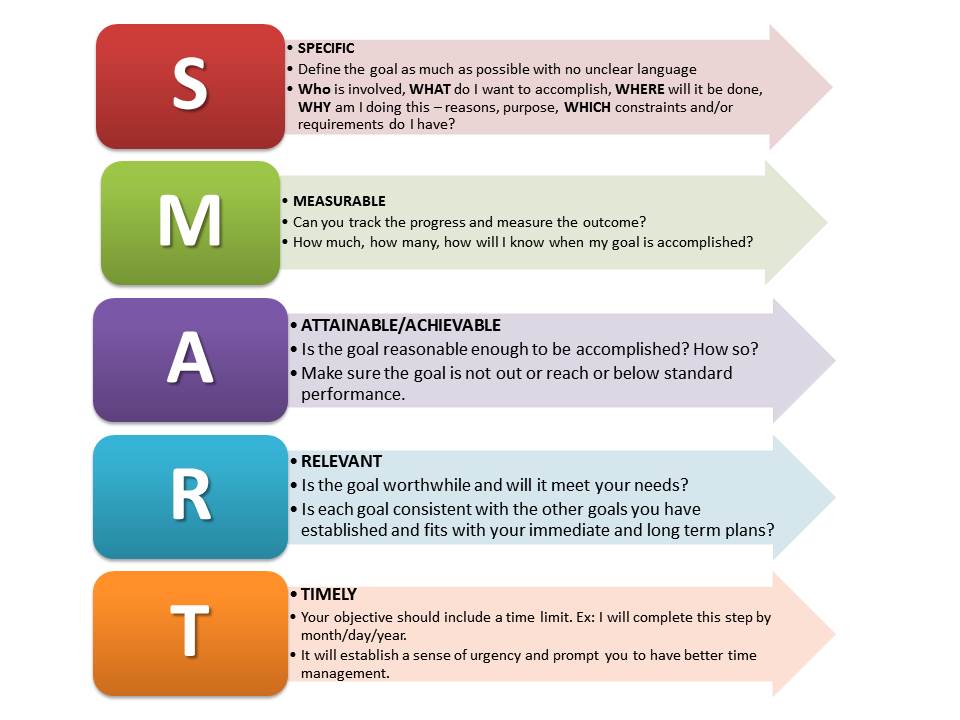
Cover how to make S.M.A.R.T. Goals (see BSA program)
Read "String, Straightedge, and Shadow" and do examples with them
Read 1st story in "Mathematicians are People, Too" Vol I and do math experiments
Talk about the power of symbols and tools
Start "In The Beginning" by Wile general science text: light
Start: "History of Science"by Wile in reading
Do activities in "Sharing Nature with Children" in hand's on field trips
Van games while driving to Jamestown and Yorktown
Optical Picture Puzzles book
Measurements: "The Librarian Who Measured the Earth" and do hand's on measuring with little ones, conversion between units for older ones

WEEK #4) Joy of Service (from ""Quest for the Abundant Life")
IMAGINATIVE ARTS: Literature, Art, Music
Make Mosiacs and study other Persian/Middle East Art
Picture Study of Adam and Eve and ancient middle east art
Read "The Choice" by O.G. Mandino
Catch up for rest of the month! Watch "Lagaan"
Spelling Bee
October 2016
PRINCIPLE OF MONTH:
Freedom Requires Courage

Devotionals
WEEK #1 LEADERSHIP: People of Courage: what does it take to keep us free?
Painless Grammar M T W TH F
Read "The Gorgon's Head" and "Hypatia: Woman of Courage"
Moses and Ancient Israel
Abraham and Isaac
Writing assignment about what we learned from the leaders of that week
Crust skills:Painless Grammar, Math, Latin, Cooking

WEEK #2 GEO-CONQUEST: Geography and Culture
Mom-led:
Early Chinese rulers, wars and culture
Intro to Maps of Asia and points of interest
Buddhism and Confuscianism
Yin-Yang
Read Chinese myths

Kid projects:
Asian/Chinese culture and food
Art or Prezis
Map studies: know countries and major geographical features and cities of Asia
Simulations
Update time-line
Crust skills: Time line, writing, map studies, cooking

WEEK #3) EUREKA: Math and Science
Chess: ancient game with much to teach us!
Watch new Uganda chess champion movie by Disney and discuss
Intro to Logic and Euclid
Abacus: how to use it and practice!
Study water and air from "In the Beginning" by Wilke (?)
Chinese animals: prezi or presentation?
Gunpowder: history, chemistry and uses
Chemistry: read "Mystery of the Periodic Table" Ch 1-3

WEEK #4) IMAGINATIVE ARTS: Literature, Art and Music
Study Chinese music, art and poetry with projects and immersion
Read "The Single Shard"
Catch up for rest of the month!
Spelling Bee
Practice Calligraphy

Origami

Schedule for Year: Part 1 Basics

Living in New York, I actually have to document and validate what is in my brain. I will hurry and post this as is as I listen to my three year old pounding nails into hopefully the board he is supposed to (with baby brother looking admiringly on), older kids packing upstairs and take a deep breath before almost a month of awesome historical field trips and visitors!!

(Tomorrow Gettysburg and next week Jamestown, Yorktown and Williamsburg!!)

I have also updated our daily schedule to more accurately reflect our current schedule.

September 13, 2016

Dear Medina District support team for homeschoolers,

Statement of Intent: I intend to homeschool _________ Biesinger for the 2016-2017 year. They will be in _____ grade. We will turn in quarterly progress reports and test them at the end of the year.
I will submit reports at the end of October, the end of December, the end of March and the end of the year in June, along with testing in June. Thanks for all you have done to make our experience in New York a success so far!

Hours of Education:
As for the number of hours that we homeschool our children, that is difficult to measure. They get at least as much learning time in as any child does in school and perhaps more, when one considers the “down time” that happens as teachers address behavioral issues or the repetition of instruction necessary when teaching 20-30 students. What I can tell you is what we don't do. We don't have electronics (video games/computer games) at all in our home. The limited number of programs we watch during the week all have educational purpose. Truly, my children are being educated almost constantly when one looks the many ways a child can be educated:
--doing chores
--personal reading of quality literature (my kids don't read “fluff” books like “Captain Underpants” :).)
--writing to record thoughts or when accounting for the learning done in a day
--service rendered in the community
--family sports activities
--nature study
--moral education through daily family devotionals and scripture study
--anger management and socialization through play
--drawing
--playing games: custom skill (depending upon the game: i.e.Monopoly—math, economics; Scrabble: spelling, etc.), sportsmanship, communication, perseverence, how to lose, strategy
--cooking
--sewing
--exposure to quality books through parent-led family reading times twice daily (books like “Don Quixote,” “I am Malala,” and “Tom Sawyer”)
--painting
--meal-time conversations together about what we have learned, world events (like 9/11) or concerns
--home improvement projects
--music lessons for sign language, piano and choirs
--self-discipline through accountability and self-directed studies and planning
--field trips and preparation for those trips (Gettysburg, National Zoo and Smithsonian, Williamsburg)
--discussion of world events as they come up in a home with parents who love learning
--reading done aloud on the way to and from church events and field trips, not to mention the quizzing initiated by my husband, road games developed, crisis management and patience and resilience learned with siblings in close quarters

Truly, in light of the fact that we carry on our learning schedule through the summer with slight variations (more field trips, swimming lessons, cultural events like Shakespeare plays in the park), you can see that they are educated almost year round. To try and compartmentalize the education into bite-size, measureable packets would be extremely difficult as you can see. I can only assure you that they are exceeding the required about of study time for their grade level.
Material Covered: I would ask you to indulge me for a moment as I try to briefly illustrate my approach to educating my children.

Weekly Accountability:
#1 Weekly charts
I will include a sample page of ______'s weekly chart, which covers material like math. Be assured that I am mindful of where my child is at and am always seeking improvement. Some children learn skills like mathematics at different speeds and I believe that a child that has confidence in their learning will learn faster than one is constantly being pushed into the ZPD, or the zone of proximal development.* (See end notes)
However, I believe that daily exposure and immersion in math skills and logical processing is important. We use the following:
--Proficiency level (not grade level) Saxon math books
--”Hand's On Math” curriculum
--dice and other math games
--flash cards and hand's on practical application of mathematical skills: i.e. measuring and cooking
Similarly, I require my children to do writing, piano and many other worthwhile tasks daily. These must be fulfilled before they get any privileges on the weekend that involve the media or friends.

#2 Monthly Outlines
I have monthly outlines that follow a theme that will strengthen both the “core” and the “crust”** of my children, as well as expose them to the four “lenses of learning.” (See article and chart on attached sheet.) As you can see from the chart and my lesson plans for the upcoming two months, my children get a scope of learning that will serve them well. I don't only want to fill their minds with knowledge. I want to teach them how to process it and apply it to the world at large in a meaningful way.

#3 Self-directed Weekly Goals
I am a firm believer in the efficacy of self-directed education: a self-directed learner is a life-long learner. I have weekly interviews with my older children assessing their previous week's goals and then being present with them as they set goals for the upcoming week. Do they always reach their all of their goals? No. However, they learn how to fail and try again, a powerful lesson. And they do try again and improve.

I will attach a few sample sheets of these “Student Accountability Reports” (or SARs) and have the record of every SAR in a folder right next to their weekly charts. At the end of the quarter, I will review them and submit a briefer report but these reports and charts are available upon request.

I love to learn with my children and am looking forward to a great year! Thanks for your support.

*”The zone of proximal development, often abbreviated as ZPD, is the difference between what a learner can do without help and what he or she can do with help.[1] It is a concept introduced, yet not fully developed, by Soviet psychologist Lev Vygotsky (1896–1934)
Various investigations, using different approaches and research frameworks have proved collaborative learning to be effective in many kinds of settings and contexts.[17] Teachers should assign tasks that students cannot do on their own, but which they can do with assistance; they should provide just enough assistance so that students learn to complete the tasks independently and then provide an environment that enables students to do harder tasks than would otherwise be possible.[14] In the context of adults, peers should challenge each other in order to support collaboration and success.” (Wikipedia, “ZPD definition).
Many educators feel that to push children into the ZPD at too early of an age too regularly will kill their love of learning and confidence. Puberty is an excellent time to push into the ZPD, when a child's confidence is built up from their years in what my co-educators call “the love of learning” phase.

-----------------------------------------------------------------------------------------------------------

**“The Core and Crust of Leadership,” by Timothy Clarke
Two weeks ago, the charismatic German politician and heir-apparent to Chancellor Angela Merkel, Karl-Theodor zu Guttenberg, resigned as minister of defense. It had come to light that his doctoral dissertation was adorned with more than 300 instances of plagiarism. A spectacular leadership failure to be sure, but why?
A simple way to think about leadership is to divide it into two parts — a core and a crust. The distinction gives us a clearer eye. The core represents those things that are indispensable, while the crust those things that are important. What then goes in the core? And what goes in the crust?
The core of leadership is character. It represents the essence of who you are and what you stand for. It has nothing to do with Churchillian eloquence, a puckish sense of humor or grasp of strategy. The crust of leadership is all of that — all of your knowledge, experience and skills. Both parts are important, but not equally important.
Viewed through the core/crust lens, leaders congregate around three main types:
1. Strong core + strong crust = great leader. If you are strong in both areas, you have the powerful combination of character and competence. This is where greatness lies, because you have the capacity and the intent to help others and accomplish meaningful goals.
2. Strong core + weak crust = nice leader. A nice leader is a person of character who lacks competence. Leaders in this category work hard, care and have integrity, but their lack of competence holds them back from making a fuller contribution. We trust them personally, but not professionally.
3. Weak core + strong crust = dangerous leader. A dangerous leader is a person who combines great intelligence and skill with flawed character. When a leader has significant capacity and directs that capacity toward destructive goals, people suffer.
In the annals of history, great leaders become famous, dangerous leaders become infamous and nice leaders become invisible. Thus, we remember the Lincolns and the Stalins. Everyone else is lost in obscurity.
Now let me ask two important questions: First, where do we spend most of our time — on the core or the crust? Need I even ask? Most individuals and organizations spend no less than 95 percent of their development efforts and resources on the crust. We obsess on growing and deepening the crust. We want our leaders to be clever.
Now the second question: Where do the biggest leadership failures come from? The core, of course. The erstwhile German defense minister is Exhibit A. It’s always a collapse of the core.
The essence of leadership is the process of influencing volunteers to accomplish good things. Leadership begins with the core, with our intent to lead. The first question of leadership is simple: Why do you want to lead? Isn’t it interesting that we rarely ask such a question when we hire or promote our leaders. And yet the question reveals the motivational basis of a person’s desire to lead.
Let me re-emphasize that people are volunteers. This acknowledgment reminds us of a couple of things. First, leaders are no better than their followers. Second, performance is based on discretionary contribution. The history of leadership is largely a chronicle of people being muscled, coerced and pressed into service. Actually, this isn’t leadership at all, but we’ve been calling it that for centuries and now it’s catching up with us. Increasingly, we see a very interesting trend in organizations. In a turbulent, globalizing world, talented people are less willing to put up with core-less leaders, regardless of how clever they are. Next-Gen workers, in particular, seem to have a highly developed sense of smell for dangerous leaders. If you don’t pass the smell test, they will resist your leadership or simply leave. The personal risk is just too high.
There are no shortcuts to becoming a great leader. It takes hard work, humility and self-discipline. Meanwhile, our society is in desperate need of people with that all-too-rare combination — strong core and strong crust. Both will be tested, but the toughest tests will be tests of the core. And they certainly will come!
Timothy R. Clark, Ph.D., is an author, international management consultant, former two-time CEO, Fulbright Scholar at Oxford University and Academic all-American football player at BYU. His latest two books are "The Leadership Test" and "Epic Change." E-mail: trclark@trclarkpartners.com

------------------------------------------------------------------------------------------------------------------------

From “Teach the Child”:
There are four “lenses” that each child should have to properly view the world. Without these lenses the “student is handicapped in his ability to see things as they are.” Morality is the hub in which these things function to help distinguish between right and wrong.
    1. Math (for the ability to induce truth through logic and reasoning - inducing truth)
    2. Science (for the ability to deduce truth through observation)
    3. Social sciences (for the ability to see truth by widening perspective to see norms and values)
    4. Arts and language (the ability to judge truth through beauty/value).

From Introduction to "The Gateway to the Great Books":
There are 4 colors “representing 4 aspects of ourselves as we use words to communicate what we know, think, feel or intend”:
1. Yellow - works of imagination (arts and language)
2. Blue - biographies and histories (humane letters or social studies)
3. Green - mathematics and natural sciences
4. Red - philosophy or theology (morality)

You can see from the visual below how I segregate subjects and skills into different areas in the lenses and identify them as crust skills or a core lessons. Some activities can serve as both: reading a book can strengthen the core of someone's compassion for a culture as well as teach them crust knowledge of geographical or cultural facts. However, the chart gives you a general idea:

Here I inserted the "Core and Crust" visual of how I incorporate the Core and Crust concept with the lenses.  Check out this video to describe it.

_________________________________________________________________________________

YEAR-LONG TOPICS AND SOURCES
Time Period: Ancient History
Pre-history through Fall of the Roman Empire and Early Exploration

Monthly Break-down:
Month-long activities:
Theme-based devotionals, memorization, and family reading
Spelling lists derived from reading material and project studies, tested 2xs/month
Latin (“Getting Started With Latin”)-1-3 daily exercises
Physical fitness: basketball 2-3 days a week, personal fitness programs (running, biking, swimming) 2-3 times a week
Authors in the Attic”: free writing group that meets once a week where creative writing submissions are shared (all ages)

The following activities are ongoing throughout the year and are in addition to the monthly outlines
Week 1: Leadership Academy
Painless Grammar”
Young Men Group led by Dad: based upon “Man-votionals” and “The Art of Manliness” for 11 and older
-readings and discussion
-outdoor adventures
-leadership and planning experience
-personal grooming
Young Ladies Group led by Mom: based upon “Beautiful Girlhood” for 10 and older
-cultural activities
-readings and discussion
-manners and etiquette
-personal grooming
-outdoor activities

Week 2: Geo-conquest
Map studies and testing
Cooking and culture (field trips where possible)
Learn points of interest in continent/area of the month (changes monthly)
How to do Prezi's and Powerpoints: present one during this week
Book of Rule”: study of governments of region

Week 3: Eureka!
Study symbols and tools of science and math through various awesome books like “Go Figure!,” “The Math Book,” “Mandala,” “Math Games and Number Tricks,”etc.
Focus on one or more examples from “Mathematicians are People Too” and do exercises
Sharing Nature with Children” activities
Euclid: do geometric proofs
Cover “The Art of Argument” one day

Week 4: Imaginative Arts
Art projects and lessons
Plays: our goal is to do at least one online production
On Stage” games: acting practice
Play on Words” and “Common Phrases” for cultural literacy and fun with words!
Langston Hughes” and other poetry


Wednesday, August 31, 2016

Lesson Plan: Follow the Spirit Daily

My mantra this year is "follow the Spirit."

What does it tell me to do right now?
#1: No clubs.  No outside groups.  Just us. Sigh. I was looking forward to trying to make online/distance groups work, as well as some more sign-language choir with friends.  Not now, apparently.
#2: Don't worry.  Enjoy learning.  Be patient. Learn the lessons God has for you.
#3: Don't force or coerce: just offer classes that I feel inspired to do (see outline later) and move forward in faith
#4: Daily accountability: kids document what they did for the day on a paper for them and me (and the others in the family) to see. (I believe "returning and reporting" is powerful.)
#5: Let the kids lead.  For instance, the other day Maia (5) said she wanted to paint the next day. (I felt prompted that she needed more Mom-time and so I asked what she wanted to do together.)  "What do you want to paint?" I asked.  "The ABCs" she said decidedly.
Rather than look on pinterest, I thought about how we could paint the ABCs.  We got out some index cards, painted one letter per card, took turns until all the alphabet letters were painted...and then hung them up!  Super cute, she was fulfilled, we learned, we carried it through. No extensive prep or worrying.  Time to move on. It was enough.

Spirit now?  Paint the house and finish it.  Our family needs more room to learn :).

Monday, June 6, 2016

Which Part Is Mine?

My friend asked me a great question:

How have I stepped back and allowed them to fail?

In what ways did you do that? It's been a very recent conversation at our house, stepping back. But like in your "which part is mine" post, different kids have different needs. Some I can step back far and easily. Others still need it. Different situations also need different levels of involvement. If others are relying on them to be successful, then I need to help them be successful. If the failure lies solely with them, fine. I've seen others do it completely wrong - canceling a while scout activity because one boy didn't make a call to arrange it, yet the leaders didn't remind and parents probably weren't aware. They call it a lesson, but how embarrassing for the boy. Would he accept that responsibility from them again? Probably not.

What part is mine?  These are my answers, but yours may look different.  Please post below any you have or ideas you have!! :)

--Protect environment: structure, respect, love, food :)
--Weekly accountability meetings: what do you want from Mom?  How can I create a class or find a class or experience that will help them?  Help facilitate it.  Help them set S.M.A.R.T. goals
--Lessons you feel they need to learn: devotionals (moral lessons), work ethic
--Follow-through with consequences
--"Return and Report" opportunities

To allow for failure means that there is something they are failing at: it means they are trying. It means they are reaching. It means they have commitments.  My friend's last situation is definitely not failure completely on the scout's part...but there is some ownership of the scout in that situation as well.  If the scout wanted it badly enough, he could have insisted or pushed forward.  No...not all scouts have that passion or vision nor do they need to have it to be a good scout.  But I think every situation has something to learn from...even that last example from my friend.  

Quick response, sorry!  

Sunday, March 13, 2016

Three videos on approach to teaching and learning

In these videos I explore:

1) The value of including students of diverse ages and abilities.  
I find that kids tend to separate themselves into the classes they need by either coming prepared to indicate readiness or by being willing to sit quietly and respectfully.  When the invitation is available to all who are respectful or prepared, they include themselves as they are ready to meet the expectations of the class.

I generally open up any class to anyone who wants to even just sit in quietly to listen if the kids insist they want to do it with us, although some classes I require them to come prepared to share or teach before they can engage fully with us.  Some classes have prep; some don't.  I decide which and the kids decide for themselves if they want to come :).

It's amazing the levels of connection available to even young learners!

2) The power of  "coming prepared to teach."
I find that coming prepared to teach = coming prepared to learn on a deep level.  There is something about taking ownership enough of a subject to research it and teach it that makes the learning stick.


Here is a look at BYU-Idaho's approach that captures this same principle:

3) When knowledge is taken to understanding and then applied to create intelligence, genius is born.  The world is changed.

When you are aware of the levels of learning available, you can reflect on what is happening in your classroom and your home to see what level you are encouraging or experiencing.

Hope this helps!  Please feel free to ask questions, give advice or supplemental ideas or feedback in the comment section below :).

New Videos: Getting Started

Getting Started Part 1

Getting Started Part 2

This ones for you, Tiffani!  Best of luck and let me know if you need anything else or have any feedback!

Wednesday, March 9, 2016

Power of the Devotional

After hundreds of way less than perfect devotionals, I realize now that each devotional shaped the core of my children. True, some were just drops in the bucket, but some were a gush of awesome-ness.  I love this idea of sharing what I do because it makes me reflect on what I do for homeschooling and why I do it, a powerful process for anyone :).  It has also helped me to see the joyous imperfection that is somehow making a difference!  Cracked pots away!!

Devotionals.  Awesome.  Powerful.
This is how I plan for them:
--some video or thought has been on my mind: I find a way to incorporate it (usually can) or just say, "today we have something I feel God wants us to learn about"
--I see some cool video or idea from someone else and copy it (love this one)
--think of our theme for the month (ours being "civility and its effect on society");  sometimes I will just find synonyms or tangent thoughts from our word study on it and go into depth there
--think of our daily focus: today it is Geo-conquest (since we have shifted our days all forward one since we weren't here Monday), so I looked for cultural and historical examples of civility.

I google or look on my "go to" websites mentioned before (lds.org, values.com, etc.) with a prayer in my heart and a feeling I am looking for my kids coming away with.  Remember, we want to change their core, strengthening it.  That is the purpose of devotional,...not the memorization of random facts.

So.  I get started with my devotional. I have the videos ready, any supplementary material, I call the kids down.  We start with our "attention grabber" (we haven't always done this, but it is fun!).

Today it was "Generation Gap": importance of communication is important despite differences, right?


Next, the "kid of the day" (Chugger-dude today) picked a patriotic song.  "Wee Sing" or "Classroom Classics" have some great sing-along music lists to choose from if your kids aren't as enthusiastic as mine.  Some of the little ones march around with a flag. I believe in the power of music.  I envision my boys in the trenches with patriotic songs in their heads strengthening them.  This is important to me so we do this.  What is important to you?  What will help your own children feel the feelings of patriotism that you want them to feel?  Videos? Stories? Songs?  Don't be deceived by their apparent apathy (although that can be annoying).  They are getting it at least a little.

Then we do our pledge of allegiance and sometimes a poem we are memorizing, although that has been more done at breakfast during our "Biesinger Creed" time lately.

Then onto devotional!

Today's was, as I mentioned before, historical and examples in the world around us of civility.  As I searched for videos, I came across the last one, a longer one, that I will save for tomorrow.  I found the others and organized them in a way that had stronger ones at the beginning and the end. (I don't like to end on a dud...although I learned that through a lot of experience!)

We began with one of my favorite ladies, Kathryn. I have met her from the years when the kids did more of the devotionals.  This is a fun way to do it and helped expand our base of videos to draw from.  Sometimes they had 10 videos! I had to put a limit on it, although I hated to limit anything.  Do what you feel you need to :)...and try to be supportive.  Sometimes their videos were a stretch to apply, so I made them apply it and make connections :).  That was interesting.


Kathryn is a great example of someone who really values others, an important element of civility.  She also talked a great deal about how to see others and appreciate diversity.

Kel (17) shared about the value of trying to see the value in each other's experience and not just trying to "one-up" each other, a result of our conversation last night about friends and conversations he has been having with them lately.

We then looked at this short video about chivalry.  It was not so awesome, especially at the end (I just skip through videos sometimes to preview and sometimes "take a chance"...failed a bunch on that one, but I just don't want to take the time to pre-watch everything! Don't be afraid to stop a video mid-watch and talk about why you stopped it...great learning :).)  However, it did bring to light the role of civility in society and how it was made more structured in the form of chivalry.


This next video was truly awesome, an example of civility during wartime: Christmas Truce of WWII

We wrapped up with a surprisingly peaceful time as I testified of the importance of being civil, even when it is hard. I challenged them to practice civility with each other, especially today as I am leaving to go mission-shopping with Tova (19) and will be gone for most of the day.

Reflection time had music playing and about half-way, someone got everyone's books (I was already writing in mine).  The little ones were quietly stacking dice until I asked them to put them away for reflection time.  I concluded by asking everyone to share their personal definition of "civility"...then did a reflection treat (sometime like a dum-dum or a marshmallow).

***********
This is the one for tomorrow....the kids don't like them as much but I like to mix it up and they do get something out of it :).

Tuesday, March 8, 2016

Aspire and History prep: the "what," "why," and "how" of it all

Prep for tomorrow:  history and Aspire.

Image result for image of chubby bunny gameAs I read "Aspire," I am struck by ways I need to improve my communication. Hmmm...there has got to be some kind of fun game about "communication."  I know!  The "chubby bunny" marshmallow game: the Goob (14) is planning on attending so I like to liven it up a little with some humor.  (He found out we have a donut and hot cocoa (it is 6 am) and decided it was for him :)!)

I was thinking about history from the perspective of what, why and how.  First, the "what."  Quite simply,  I realized that I was really lacking in modern history, which fell into place with our four year rotation through history:
-ancient
-medieval through renaissance
-American revolution
-Civil-war through modern
The cool thing?  I know more about the others because I have gone through them!  The reality :)?  Truly laughing out loud: this is the first year in 12 years that I have covered this period on purpose.  The reality.  And somehow my kids are just fine :).

Slow down.  Relax.  Do what is most important.  Have fun with it and then enjoy the moment!

Second, the why.  I am sure you have heard the phrase: "If you do not learn history, you are doomed to repeat it."  C.S. Lewis put it this way:
Image result for image of cs lewisMost of all, perhaps we need intimate knowledge of the past. Not that the past has any magic about it, but because we cannot study the future, and yet need something to set against the present, to remind us that periods and that much which seems certain to the uneducated is merely temporary fashion. A man who has lived in many place is not likely to be deceived by the local errors of his native village: the scholar has lived in many times and is therefore in some degree immune form the great cataract of nonsense that pours from the press and the microphone of his own age.
So when I prep for the love of learning version of history--our "time machine"-- the way I select the material from what I have read for my personal studies is to consider: what do I want my kids to learn from and resonate with and apply?  I try to ask several versions of the following questions during class:
--what would it have felt like to do... or to be... or to have this happen to you?
--what would you have done?
I want it to shape their little hearts, which leads to the next point:  how.

I like to make it as interactive as I can, again considering the "Multiple Intelligence" concept by Howard Gardner.  Games, videos, art project, food,...I want them to feel like they were there and evoke some of the emotions an eye-witness may have felt.  Excellent historical material helps: Bauer, Hakim, library books.  These are all my favorites to turn to first to make the history to come alive.
Image result for image of underground railroad
Bauer has some great "study helps" in her companion activity books, although those can get overwhelming to me.  I tend to get mired down in the quantity. Normally I plan for three or four ways to help them immerse themselves, start with my favorite (or save it for last) and then be okay adapting to the moment, allowing myself to discard one or more if they are done. We have all been there.  The eyes wander, the bodies wiggle (more than usual)...you just have to decide if it is worth the energy to pull them in to the topic or recognize if you are approaching the dreaded ZPD.

Most of the time, giving them that one more glimmer of feeling and association is worth it to me but I am learning more and more when not to push it.

Ideas:
--build something with blocks or legos (last week it was buildings inspired by our online tour of Frank Lloyd Wright's architecture)
--cultural food
--dances from that time period (we did some slavery revival type music and moved to it, trying to express how we felt.  Do it with your kids.  You will be amazed at how wonderful it is to relax and get past how stupid you think you look.)
--"art study": you take a piece of art that reflects on the time period (like the one above) and let them observe it for one minute. Then you take 2-10 minutes (depending on success) for them to comment on lighting, imagery, emotion,...anything.  I am always amazed at the depth of response they come up with if you give them long enough.

Image result for image of lego house
I like to give them chances to bring something to share: like come up with a circus act when we talked about PT Barnum and his circuses.  If they don't have enough historical context to come up with something beforehand, I will ask them to either draw a picture or "turn and teach" someone near them something they learned about that day.

Acting out what you just learned is also a great way for the kids to make it personal.

That is the point of learning history, not so you can regurgitate it for some test.  So you can feel empathy for others, learn from their mistakes, resonate with people that are so different from yourself yet so real in their humanity that you weep for them, cheer for them or seek to emulate them.

What is your end goal in teaching history? Once you have successfully answered this question for yourself, you will know what questions to ask and what material to select.  Once you know the answer, you will find opportunities for teaching moments all over.  I know that I want my children to be excited about learning and be changed in their hearts by their interaction with the people in the past.